Table Of Content
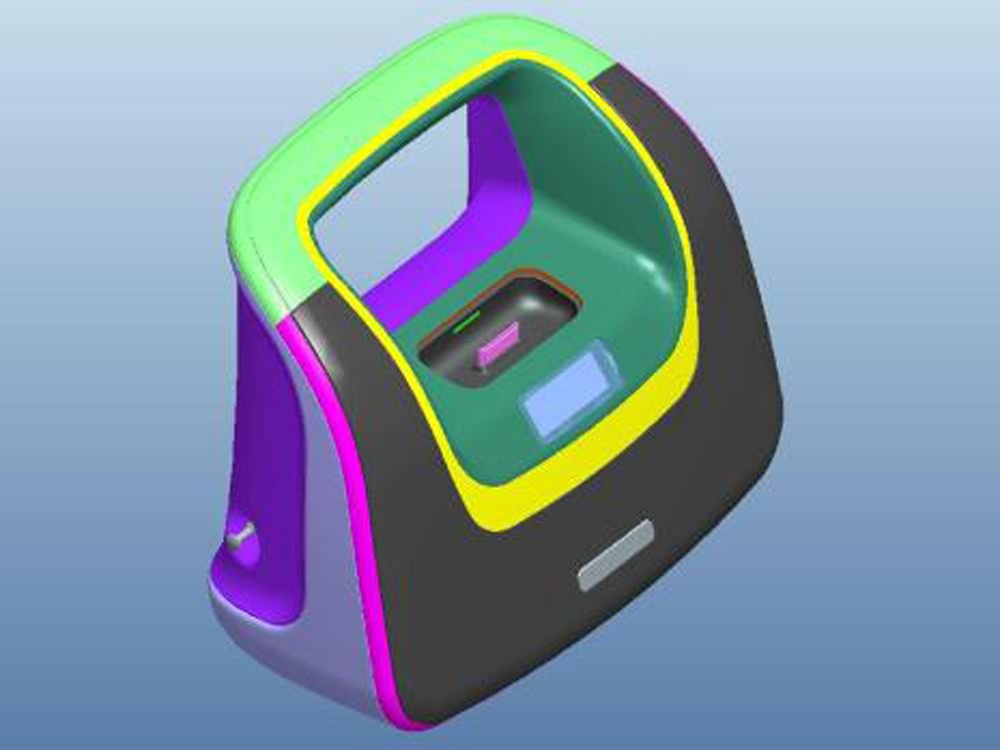
By designing your product with assembly in mind, you can save time and money during the production process. Designers should look for ways to mistake proof their designs, making the proper assembly of mating parts instantly recognizable and impossible to assemble incorrectly. By the addition of tabs and slots, asymmetrical holes and interference features the parts can be made difficult or impossible to assemble in reverse or oriented improperly. The designer should also avoid the need for any special adjustments or alignments in the assembly process.
An Intro to Failure Analysis in Manufacturing
They heard about problems in manufacturing quickly and could easily visit the Shop Floor to see things firsthand. A specific tool will be needed during the assembly process for every additional fastener type if an assembly uses various screw or fastener types in multiple regions. If one or the other hex head will work, avoid mixing socket and hex heads. Communication between designers and other departments is essential to choose the most cost-effective option while using Design for Assembly principles.
Divergent Awarded $230 Million for Automated 3D Printing and Assembly Technology - Assembly Magazine
Divergent Awarded $230 Million for Automated 3D Printing and Assembly Technology.
Posted: Tue, 14 Nov 2023 08:00:00 GMT [source]
Discover the Surefire Way to Ensure Your Parts Meet DFA Guidelines
The primary goal is to design a product and process to be as efficient as possible. Whether a product is assembled by machines or by operators, the designer and the mechanical engineer should work together to ensure that labor cost, overhead and materials are reduced as much as possible. We should always strive to produce a quality product the first time and every time and Design for Manufacturing and Assembly can help! When DFM/A is applied, your company can run at higher profit margins, with higher quality and at a greater level of efficiency. The last few decades have brought several new challenges for manufacturing companies. Technology and improvements in transportation of goods has enabled companies to source parts globally.

Types of Milling Operations: A Detail Explanation
Also, products that are designed for assembly tend to be more reliable and have fewer problems than those that are not. Create prototypes to test assembly processes for faults and make corrections where needed. DFA provides design optimization, eliminating multiple design revisions and changes.
What are the design for assembly principles?
Mistake-proofing can be achieved by using features such as color coding, shape coding, keying, interlocking, etc. that ensure correct part selection, orientation and insertion. For example, a USB connector can be designed with a trapezoidal shape that prevents incorrect insertion. Instead of a central controller, the Cybertruck is equipped with local controllers.
Manufacturers Test Humanoid Robots in Factories
You can also foster a sense of ownership, engagement, and motivation among your assembly workers. Before you design your workstation, you need to understand the tasks that your assembly workers will perform, such as picking, placing, fastening, testing, or packaging. You should analyze the sequence, frequency, duration, and complexity of each task, as well as the skills, tools, and materials required. This will help you determine the optimal workstation size, shape, height, and orientation, as well as the location and arrangement of the components, tools, and fixtures.
Challenges and Solutions: Overcoming Common Hurdles in DFA Adoption
You can also use it in the production of large-scale items like aircraft and ships. Design for manufacturing and assembly applications is in various sectors that deal with consumer product design. This is also more intense in sectors with a high demand for goods that still wants to maintain a high quality and efficiency. When a part will require multiple setups, design the fixtures and parts so it is impossible to put the part into the fixture incorrectly. This can mean adding keys or asymmetrical features such as the placement of holes that interact with the fixture. Making it impossible to orient the part wrong in the fixture will ensure greater success for our operators and avoid costly mistakes on parts that already have prior machining operations invested in them.
See below for examples of implementing these principles:
While it will provide you with the necessary knowledge about DFA and design for manufacturing and assembly, it is crucial to hire a manufacturer that understands its value. For the best methods, we at RapidDirect can guarantee speed, ease of design process, and lower cost in your product manufacturing. However, if you have a problem, you can consult with our support team for manufacturing advice. The adoption of DFA signaled a broader shift in the manufacturing industry towards efficiency and cost-effectiveness. No longer was it sufficient to just design a functional product; it became imperative to design products that were also economical to produce. DFA's principles, such as reducing part count, standardizing components, and designing for easy handling, became cornerstones of this new manufacturing ethos.
Additionally, DFA typically results in products with fewer parts and less complexity, while DFD often adds extra features to facilitate disassembly. To improve the speed and accuracy of an assembly process, avoid small or large components and provide your parts with features that make it easier to grasp, move, orient, and insert them. The design of the assembly process is essential to translating customers’ needs into a practical product design that can be manufactured.
This automation surge isn't merely about replacing manual labor; it's about augmenting human capabilities, ensuring consistent quality, and meeting the ever-growing demands of global markets. Make sure that each part fits together well and has no overlapping faces or fillets. When choosing fasteners for your product, use screws with a diameter appropriate for the job, head styles that can be automated, and washers to avoid loose parts. One of the best ways to implement this principle is to perform an analysis of part count efficiency. This is a process that involves defining essential and non-essential parts and calculating a part count efficiency as the ratio of essential over total parts. Combining the different practices of DFX can have a significant impact on the overall costs.
Force soldering may not be possible if the difference in size is too great. If possible, force soldering could cause the defect rate to increase and affect the reliability and lifetime. In addition, DFA can be difficult to implement in certain industries where you need to make products up of many small parts that need to be assembled in a specific order.
“In this new wiring architecture, subsystems are packaged and defined in one or multiple assemblies in certain embodiments. For example, a door assembly might contain one controller (or hub) that controls multiple devices, such as locking components, lighting components, audio components, etc. Since each part you design and introduce has to go through the above stages, the cost of managing a single component adds up; hence reducing the part is the most significant function of the DFA. Even with a well-designed assembly workstation, your assembly workers may still face some ergonomic risks, such as repetitive strain injuries, musculoskeletal disorders, or eye strain. You should also encourage your assembly workers to take regular breaks, stretch, and report any discomfort or concerns. The importance of assembly modeling in achieving the full benefits of PLM has led to ongoing advances in this technology.
Reducing the amount of custom machining and fabrication made in-house and incorporating commercial off the shelf (COTS) products into your product design can save you a lot of time and money. Incorporating modular assemblies into your production can be one of the biggest time-savers, especially if you have a range of similar products. Modular design also has secondary benefits as they are often easier to repair and customise, in effect increasing their utility and life cycle. Design for Manufacture and Assembly consists of two primary methodologies. DFM and DFA aim to optimise design while lowering labour, materials, and overhead costs.
This principle involves designing a product as a collection of independent modules that can be easily assembled, disassembled, replaced or upgraded. Modular design allows for parallel assembly, mass customization, easier testing and repair. For example, a laptop computer can be designed as a modular product with separate modules for the screen, keyboard, battery, hard drive, etc.
While the design of assembly aims to ease the assembly process, it also reduces the disassembly process. This is essential as it guarantees the maintenance and repair of products. One of the most expensive tolerances is thread depth, and it often doesn’t matter. Specifying thread depth to three decimal places is seldom going to accomplish much other than driving up costs substantially.


No comments:
Post a Comment